From the NFL to Mathematics: John Urschel on Brain Health and the Rise of AI
Former NFL lineman John Urschel traded pro football for a career in mathematics, only to find artificial intelligence posing a new test for human researchers.
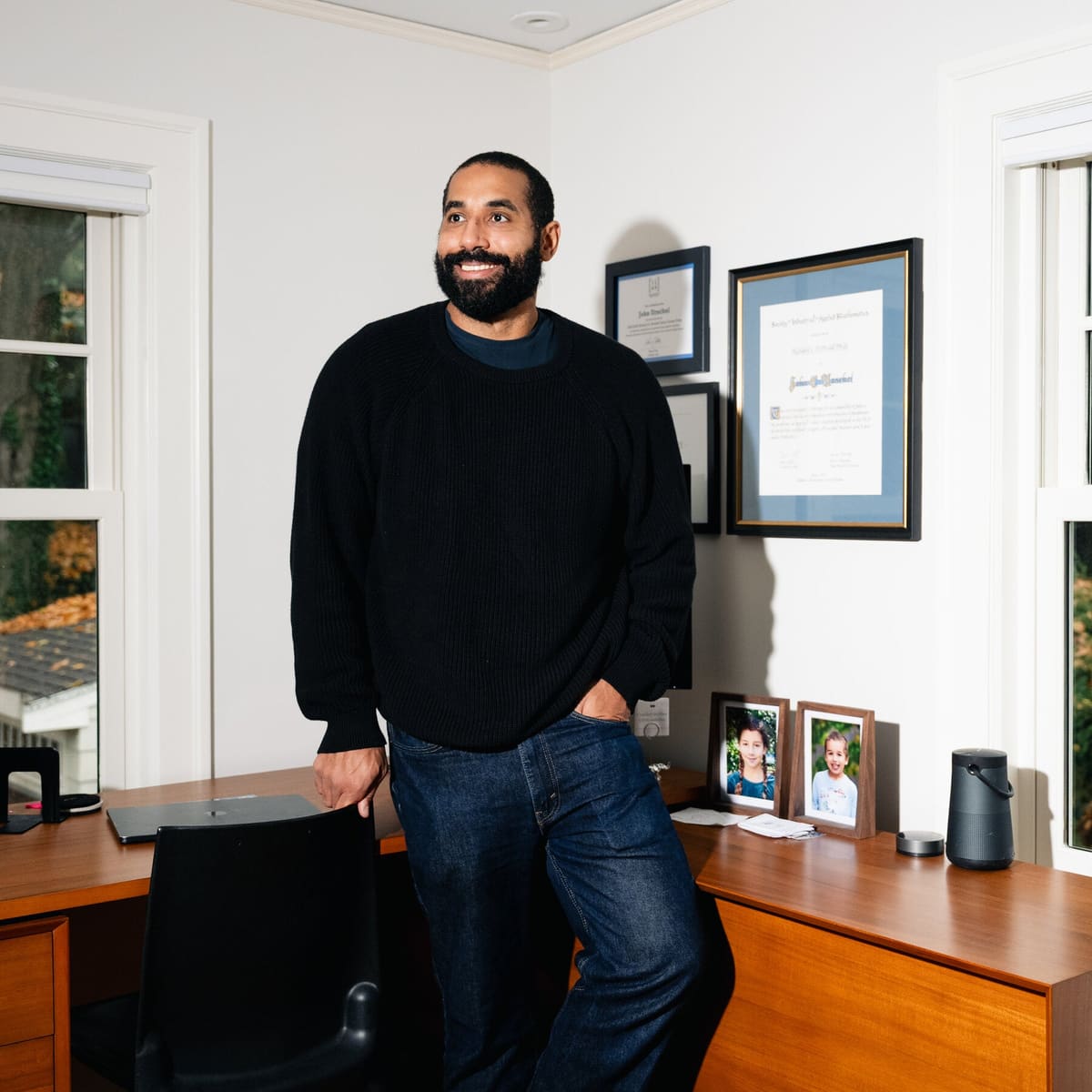
Few careers bridge professional sports and abstract university research as dramatically as John Urschel's. Years ago, the former Baltimore Ravens offensive lineman walked away from the National Football League in part because of concerns over repeated head impacts and long-term brain health, choosing instead to pursue a doctorate in mathematics.
Since leaving the field, Urschel has built a respected second career solving complex mathematical problems and teaching at the university level. Yet as artificial intelligence advances rapidly in reasoning and proof-checking, he and fellow mathematicians are confronting an unexpected new disruption.
Protecting the Mind, Then Testing Its Limits
Urschel's decision to leave football drew national attention to how athletes weigh financial rewards against the risks of concussions and neurological injury. Moving into pure mathematics offered a way to build a long career centered on analytical thinking rather than physical collisions.
Now, modern AI systems are learning to assist with—and sometimes outpace—human calculations, code generation, and mathematical pattern-finding. For researchers whose work depends on original insight, the shift raises big questions about which skills remain uniquely human and how academic training must adapt.
How Mathematicians View AI Tools
Many scientists view machine learning as a powerful assistant that can test conjectures, sort through massive datasets, and speed up routine proofs. At the same time, rapid progress in automated reasoning has forced mathematicians to ask how their profession will evolve over the next decade.
- Career pivot: John Urschel left the NFL largely over brain-health concerns to focus full time on academic mathematics.
- New challenge: Rapidly improving AI systems are changing how mathematical research is done and valued.
- Looking ahead: Urschel and his peers continue exploring how human intuition and AI tools can work side by side rather than in conflict.