Five NATO Nations Sign Record $6 Billion Deal for Over 400 CV90 Combat Vehicles
Finland, Lithuania, the Netherlands, Norway, and Sweden are teaming up to buy more than 400 CV90 armored vehicles from BAE Hägglunds in response to threats from Russia.
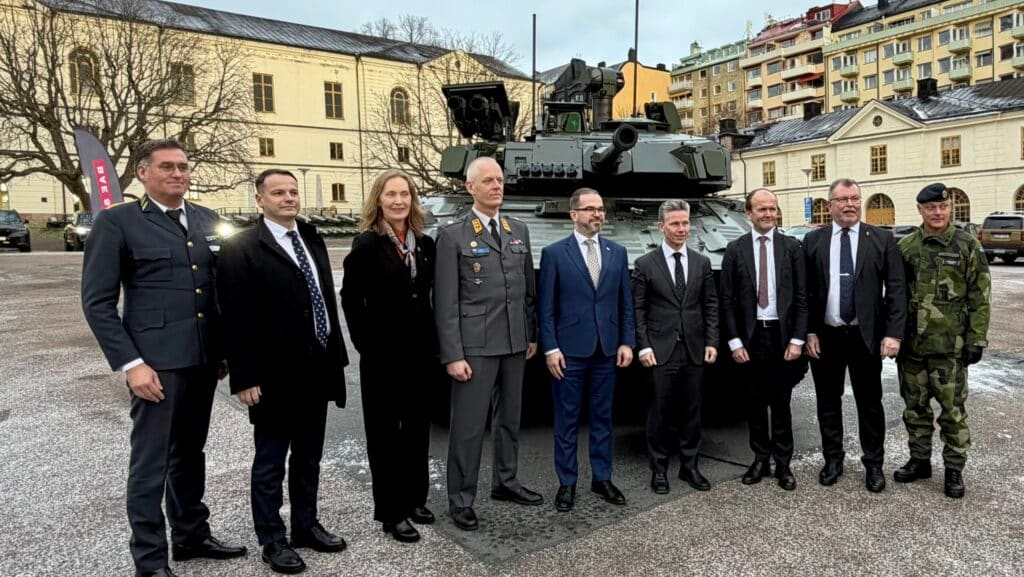
Five NATO countries—Finland, Lithuania, the Netherlands, Norway, and Sweden—have joined forces on a record $6 billion agreement to purchase more than 400 CV90 infantry fighting vehicles from manufacturer BAE Hägglunds. Officials involved in the deal explicitly linked the massive order to ongoing security threats from Russia.
Infantry fighting vehicles carry soldiers across rough terrain while providing heavy armor protection and cannon fire against enemy forces. The tracked CV90, built in Sweden, is widely used across northern Europe and has earned a reputation for cold-weather reliability and battlefield survivability.
Why Allies Are Buying Together
Historically, European nations often bought small batches of military hardware tailored to their own national specs, which drove up prices and slowed delivery times. By pooling orders into one joint contract, the five countries gain stronger buying power and more predictable production schedules.
Standardizing on the same vehicle family also makes life easier during NATO exercises or real-world deployments. Neighboring armies can share spare parts, maintenance know-how, and training routines instead of managing incompatible fleets.
Strengthening Europe's Northern and Eastern Flanks
For Washington, large European co-procurement deals are a welcome sign that NATO allies are investing heavily in their own land defense. Stronger armored brigades in Nordic and Baltic states help reinforce Europe's eastern border with Russia.
- Deal size: A record $6 billion contract covering more than 400 CV90 armored vehicles.
- Participating nations: Finland, Lithuania, the Netherlands, Norway, and Sweden.
- Strategic driver: Governments cited the need to deter Russia and strengthen regional land forces.
- Practical benefit: Joint purchasing lowers unit costs and simplifies cross-border logistics among NATO partners.