What Launching One Million Satellites Could Do to Earth's Environment
Scientists are examining the atmospheric, orbital, and astronomical risks if plans to place up to one million satellites into low-Earth orbit move forward.
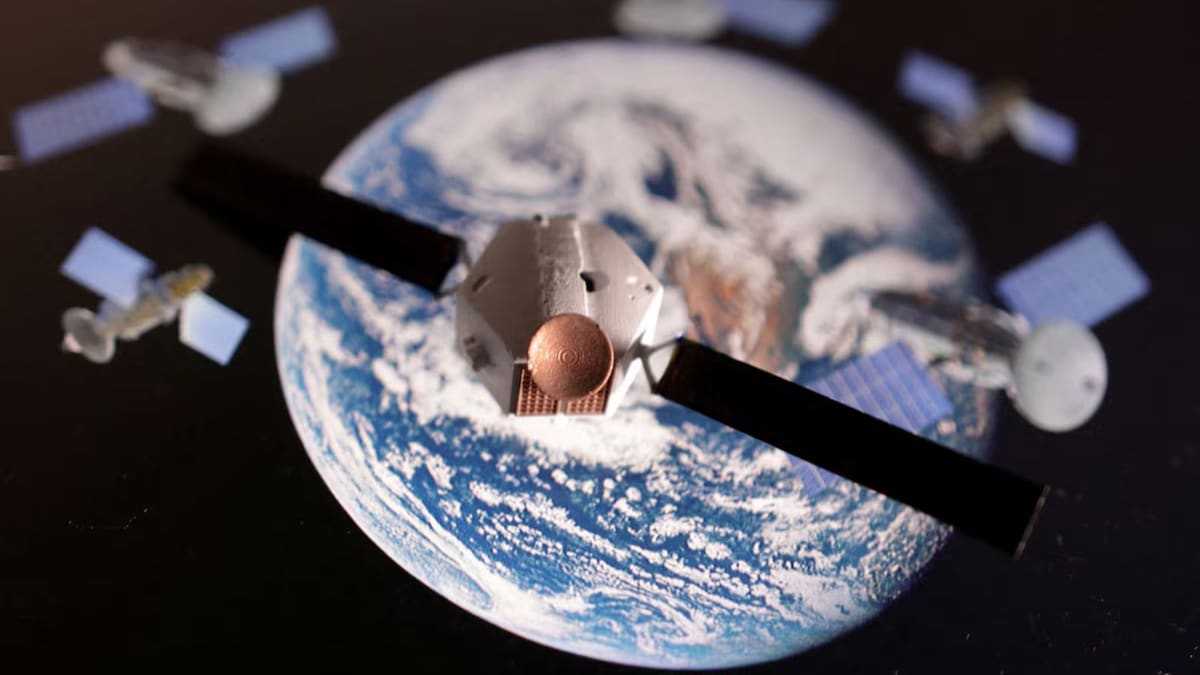
Space agencies and environmental researchers are looking closely at what could happen to Earth's sky and upper atmosphere if companies like SpaceX ever launch up to one million satellites into orbit. While satellite internet networks bring fast connectivity to remote regions, scaling fleets from thousands to a million spacecraft raises major scientific questions.
Moving that much hardware off the ground requires an unprecedented number of rocket launches. Each launch burns large amounts of fuel, releasing carbon dioxide, water vapour, and black carbon directly into upper layers of the atmosphere where pollutants linger far longer than they do near the surface.
Atmospheric Fallout and Ozone Risks
Unlike aircraft emissions, rocket exhaust and burning satellites affect the stratosphere and mesosphere—regions that play a key role in shielding life from harmful ultraviolet radiation. Satellites in low-Earth orbit have limited lifespans and are typically designed to burn up during re-entry.
When a million satellites regularly cycle out of service and vaporise, they leave behind fine metallic aerosols such as aluminium oxide. Atmospheric scientists warn that accumulating metal particles high above Earth could alter cloud formation, shift heat balance, and trigger chemical reactions that slowly erode the ozone layer.
Crowded Orbits and Brighter Night Skies
Beyond the atmosphere, packing hundreds of thousands of spacecraft into narrow orbital shells sharply raises the risk of collisions. Even a small impact at orbital speeds creates thousands of fast-moving fragments, potentially making certain orbits harder to navigate safely.
Astronomers also face growing disruption. Sunlight reflecting off vast constellations leaves bright streaks across telescope images, complicating efforts to track near-Earth asteroids and study faint, distant galaxies.
- Launch emissions: Thousands of extra rocket flights would inject soot and heat-trapping gases directly into the upper atmosphere.
- Re-entry metals: Burned-up satellites release metallic dust that could affect stratospheric chemistry and ozone recovery.
- Orbital congestion: Higher satellite density increases collision risks and space debris hazards.
- Astronomy impact: Bright reflections from large satellite fleets interfere with ground-based and orbital sky surveys.