How Northern India's Pollution and Stubble Burning Reach Sri Lanka's Skies
Atmospheric scientists explain how northeast monsoon winds carry haze from northern India—including crop-burning smoke—across the Bay of Bengal toward Sri Lanka.
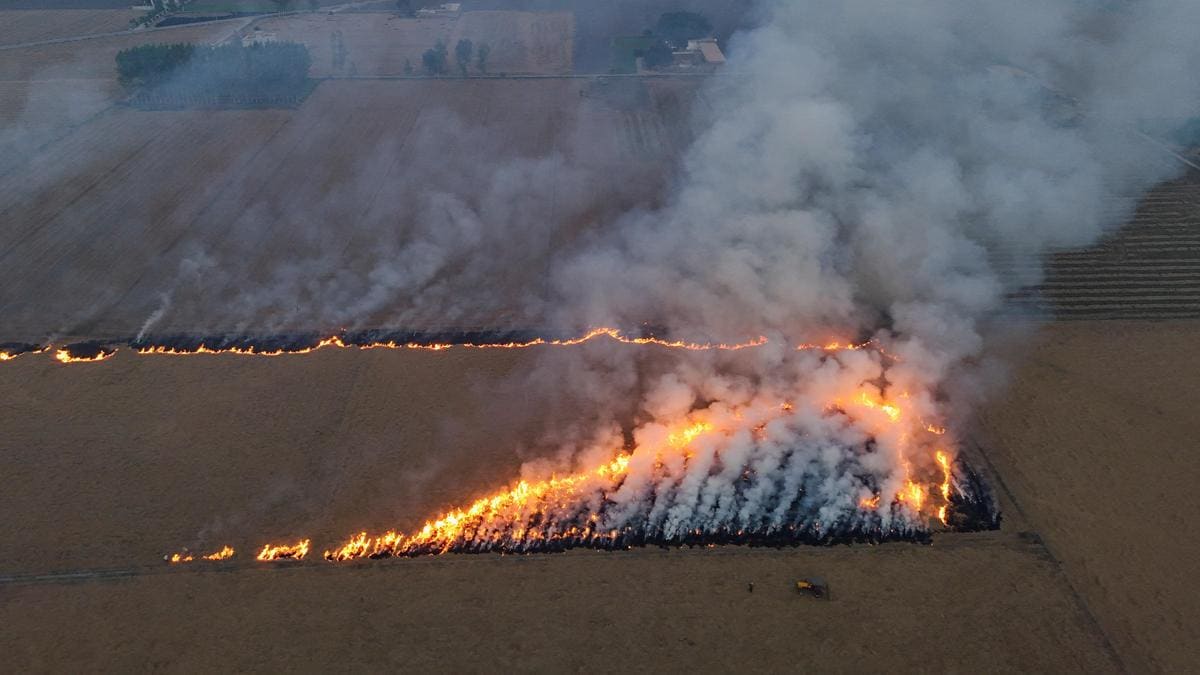
Every late autumn, thick smog settles over Delhi and much of northern India as farmers clear fields by burning leftover paddy straw, mixing with traffic exhaust, industrial smoke, and dust. Now, researchers examining regional air quality say that pollution does not stay inside India's borders—some of it travels thousands of kilometres south to Sri Lanka.
During the northeast monsoon season, wind patterns across South Asia shift direction, blowing steadily from the northern plains out over the Bay of Bengal and down toward the Indian Ocean. As these winds move south, they carry fine particulate matter and trace gases across oceans and national boundaries.
Smoke Is Only One Piece of the Mix
Scientists investigating Sri Lanka's seasonal air quality spikes stress that stubble burning in Punjab and neighbouring states is part of a much larger regional plume rather than the sole culprit. Emissions from power plants, vehicles, brick kilns, and household cooking across the Indo-Gangetic Plain all merge into a dense band of haze before drifting southward.
When weather conditions stay dry and calm, airborne particles remain suspended for days instead of being washed out by rain, allowing pollution measured in northern India to register on air-quality sensors in Sri Lanka and southern coastal cities.
Why Cross-Border Science Matters
Tracking long-distance pollution helps South Asian governments understand that clean air cannot be solved by one city—or even one country—acting alone. Satellite monitoring and wind-trajectory models now allow researchers to trace where seasonal haze originates and when downwind regions are likely to see unhealthy air.
- Seasonal driver: Northeast monsoon winds carry northern Indian air south over the Bay of Bengal.
- Pollution mix: Includes crop-residue smoke from Punjab alongside urban traffic, industry, and dust.
- Health risk: Fine particles travel long distances and worsen breathing issues far from the source.
- Next steps: Better crop-management alternatives in northern India and shared regional air-quality forecasting across South Asia.
For everyday readers, the findings show how local farming and energy choices in one region can shape air quality across an entire subcontinent.