Ancient Coins and Skull Fragments Hint at Lost Iron Age Sanctuary in France
Archaeologists in northeastern France have uncovered 28 ancient Gallic coins, human skull fragments, and a miniature bronze wheel, pointing to a forgotten ritual site.
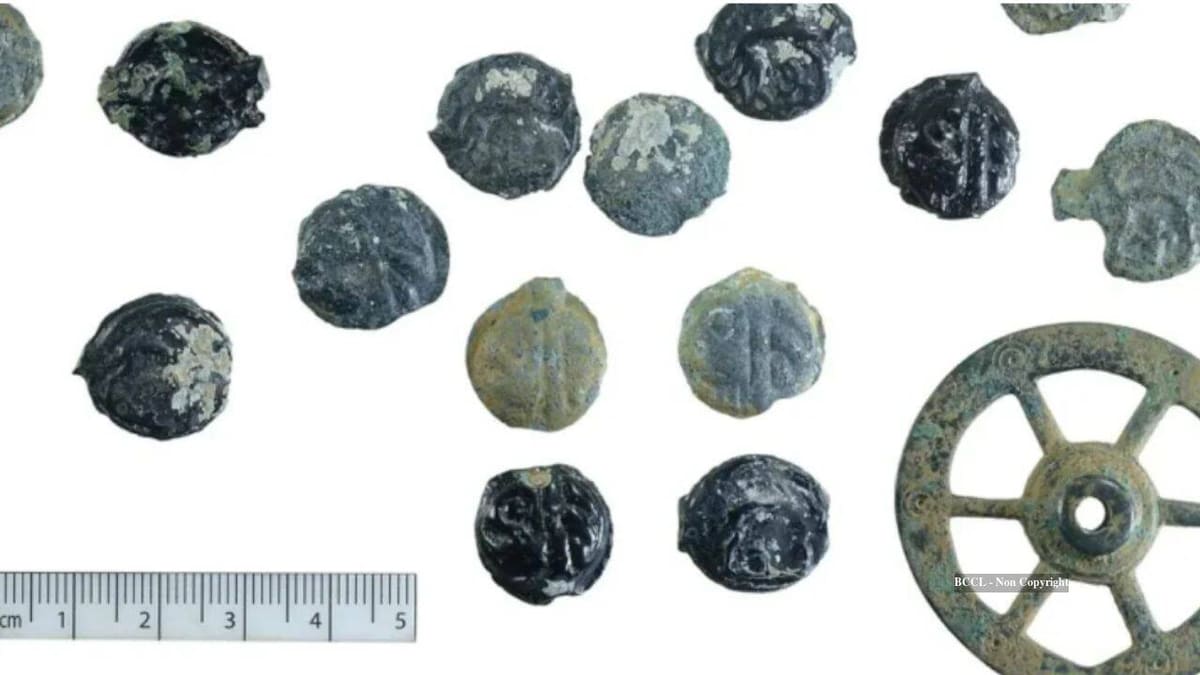
Archaeologists excavating a site in northeastern France have made a striking discovery that may rewrite the local map of ancient Europe. Digging near the town of Bure, researchers uncovered 28 ancient Gallic coins buried inside a small pit alongside human skull fragments and a tiny five-centimetre bronze wagon wheel.
Experts believe the unusual collection dates back to the Late Iron Age and may mark the location of a long-lost sanctuary used by the Leuci, a Celtic tribe that inhabited eastern Gaul before Roman rule reshaped the region.
Clues Inside a Small Ritual Pit
In archaeology, finding everyday rubbish is common, but deliberately arranged objects—especially coins paired with human remains and miniature replicas—usually signal ceremonial or religious behaviour. Ancient Celtic communities frequently left offerings such as coins, weapons, or symbolic metal items in sacred pits to honour deities or mark important tribal boundaries.
The miniature bronze wheel is an especially telling clue. In Iron Age Europe, small metal wheels were widely used as religious symbols linked to the sun, sky gods, or safe passage. Finding one next to valuable Gallic coins and skull fragments strengthens the theory that this spot served as a sacred gathering place rather than an ordinary village home.
What Excavators Will Study Next
Researchers will now carefully clean and date the coins in the laboratory to narrow down exactly when the sanctuary was active and how the Leuci traded with neighbouring tribes. Scientific testing on the skull fragments could also reveal more about the age, diet, and origin of the individual.
- The find: 28 Gallic coins, human skull fragments, and a 5 cm bronze wagon wheel in Bure, northeastern France.
- Suspected origin: A Late Iron Age sanctuary connected to the Leuci tribe.
- Why it matters: Offers rare physical evidence of pre-Roman Celtic rituals and trade networks in eastern France.
Further excavations around the pit may reveal postholes, ditches, or additional offerings that confirm the full layout of the ancient sanctuary.