Japan Space Agency Unveils Prototype of Chandrayaan-5 Lunar Rover
JAXA has revealed the prototype rover for the joint India-Japan Chandrayaan-5/LUPEX mission, bringing the search for water ice at the Moon's south pole closer to launch.
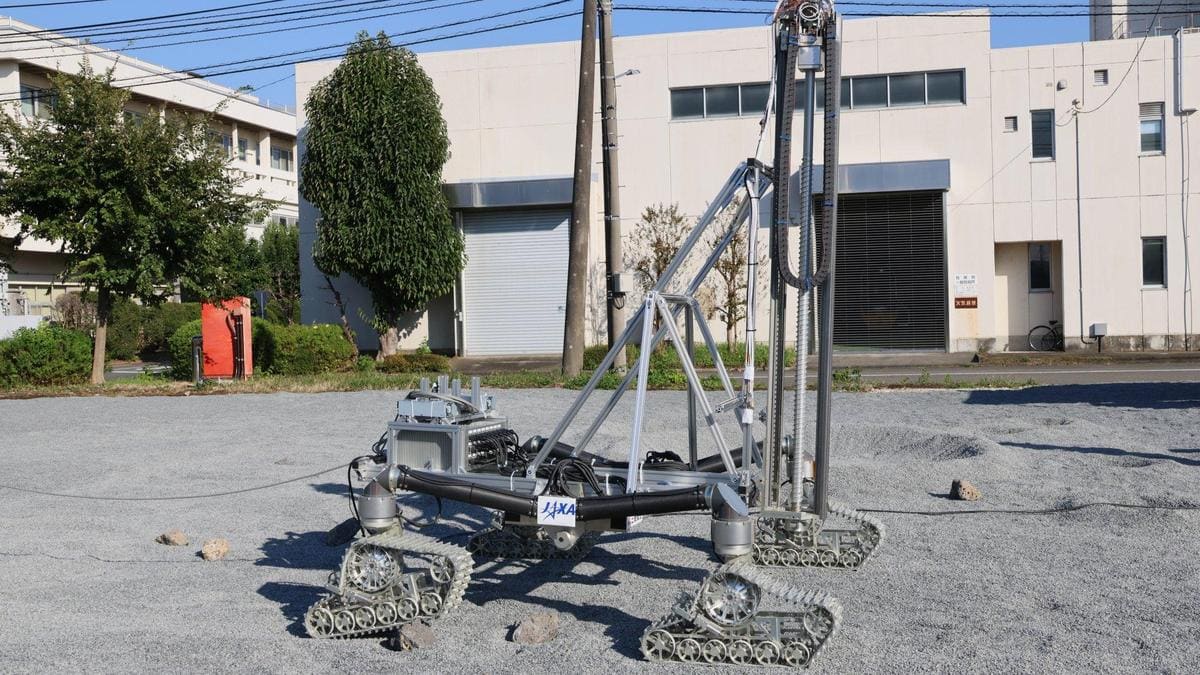
India's next major journey to the Moon just reached an important milestone in Japan. On November 25, the Japan Aerospace Exploration Agency (JAXA) unveiled a working prototype of the rover built for the Chandrayaan-5/LUPEX mission.
Chandrayaan-5, also known as the Lunar Polar Exploration (LUPEX) mission, is a joint project between India's space agency ISRO and Japan's JAXA. It will be the fifth spacecraft in India's Chandrayaan lunar series, following the historic soft landing of Chandrayaan-3 near the lunar south pole.
Searching for Water on the Moon
Unlike earlier missions that mostly observed the lunar surface from above or explored for a single lunar day, Chandrayaan-5/LUPEX is designed to dig deeper into one of space science's biggest questions: how much water ice exists at the Moon's poles, and can future astronauts actually use it?
Under the partnership, ISRO is building the lunar lander that will safely touch down on the surface, while JAXA is developing the rover. Once on the Moon, the rover will carry scientific instruments from both countries—along with international partners—to drill into shadowed soil, measure water content, and test whether lunar ice can be turned into drinking water, oxygen, or rocket fuel.
Why This Milestone Matters
Unveiling the rover prototype shows that hardware design and ground testing are moving steadily forward. Engineers test prototypes under harsh, Moon-like conditions to make sure wheels, solar panels, batteries, and drills survive extreme cold and fine, abrasive lunar dust.
- Mission name: Chandrayaan-5 / LUPEX (Lunar Polar Exploration).
- Key partners: India's ISRO (lander) and Japan's JAXA (rover).
- Main goal: Locate, drill, and measure underground water ice near the Moon's south pole.
- Next steps: Further environmental stress testing and integration of scientific instruments before final launch preparations.
For India's space programme, the mission marks a shift from proving it can land on the Moon to leading long-term scientific exploration alongside major global partners.